
Contents
- 1 A Heritage Brew That Transcends Time
- 1.1 The Cultural and Historical Tapestry: Filter Coffee Tradition in South India
- 1.2 The Filter Coffee Morning Ritual: A Sensory Journey
- 1.3 The Art of the Decoction: How to Make Filter Coffee
- 1.4 Why Filter Coffee is Still Popular: Enduring Relevance in a Modern World
- 1.5 Mastering the Nuances: Bean, Blend, and Regional Variation
- 1.6 The Next Generation: A Timeless Legacy
- 1.7 South Indian Filter Coffee Endures
A Heritage Brew That Transcends Time
South indian filter coffee is much more than a daily morning drink—it’s an integral part of the region’s cultural identity, a comforting and unwavering start to the day. For centuries, this aromatic beverage has been woven into the social fabric of South India, symbolizing hospitality, tradition, and a deep-rooted sense of community. Its distinctive preparation method, rooted in history and craft, makes it a favored choice for millions. Beyond its delightful flavor, the story of South indian filter coffee is a tale of ancient origins, colonial influence, and cultural evolution that continues to thrive today, cementing its status as the unparalleled filter coffee morning ritual.
In a world increasingly dominated by instant solutions and global coffee chains, the enduring popularity of this traditional brew speaks volumes. It’s a testament to the power of ritual, the value of authenticity, and the unparalleled satisfaction derived from a meticulously crafted cup. This in-depth guide will explore the history, the precise brewing method, the cultural significance, and the compelling reasons why filter coffee is still popular across generations.
The Cultural and Historical Tapestry: Filter Coffee Tradition in South India
The story of filter coffee tradition South India is a dramatic, centuries-spanning saga that begins with a smuggled secret and ends with a global icon. Understanding this history is crucial to appreciating the drink’s profound cultural role.
Origins of South Indian Coffee: A Journey Back to the 17th Century
The origins of South indian filter coffee trace back to the 1600s, with legendary stories involving Baba Budan, a revered Sufi saint. As the story goes, Baba Budan traveled to the port city of Mocha in Yemen and secretly smuggled seven coffee beans back to India, an act that sparked the beginning of coffee cultivation in the region. He planted these beans in the hills of Chikmagalur, Karnataka, now famously known as the birthplace of Indian coffee.
This event marked a pivotal moment in Indian history, as coffee plantations took root and grew across the Western Ghats and other hill regions such as Coorg, Wayanad, and Nilgiris. The favorable climate, elevation, and rich soil created perfect conditions for the development of unique, high-quality coffee beans that would later be recognized globally.
Colonial Influence and the Birth of the Brew
While coffee cultivation began in the 17th century, the characteristic brewing method developed later, influenced by European, particularly British and Dutch, traditions. The early forms of brewing were often simple infusions. However, the introduction of the traditional metal filter—a two-part stainless steel device—was an indigenous adaptation that perfected the slow-drip method.
The addition of chicory (a ground roasted root) became popular, not just as a cost-cutting measure during wartime shortages, but as a deliberate flavor enhancer. Chicory adds a perceived sweetness, thickness, and a dark, caramelized aroma that distinguishes the South Indian decoction from any other brew in the world. This blend became the quintessential taste associated with the filter coffee tradition of South India.
The Coffee Houses: Hotbeds of Culture and Community
Post-independence, coffee became more than just a home drink. The emergence of legendary South Indian coffee houses, such as the Indian Coffee House chain, transformed it into a public institution. These establishments became social and intellectual hubs where poets, politicians, students, and workers met to discuss the day’s events over a piping hot cup of coffee.
This history underscores that the filter coffee tradition in South India is inextricably linked to regional identity, hospitality, and a commitment to savoring life’s simple, slow pleasures. It is a heritage brew that continues to shape social interactions.
The Filter Coffee Morning Ritual: A Sensory Journey
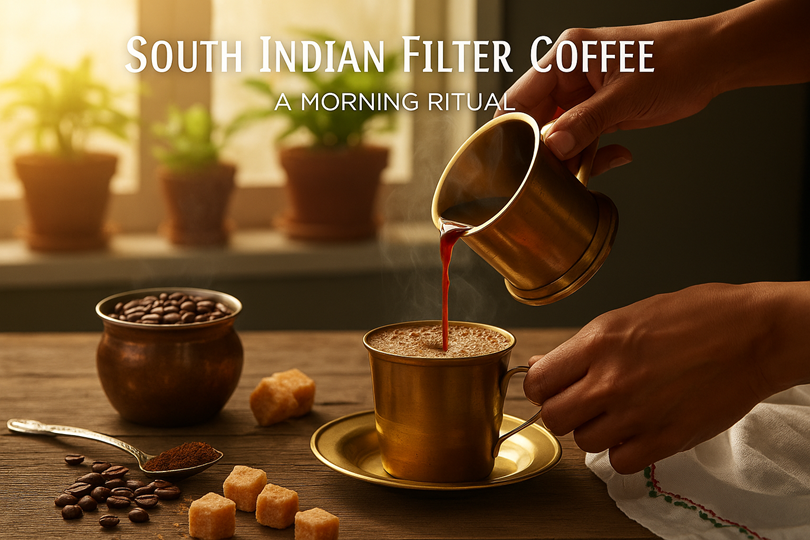
For millions, the day does not truly begin until they have participated in the filter coffee morning ritual. It is a deliberate, mindful process that engages all five senses, offering a stark contrast to the rushed, automated routines of modern life. This ritual is not about speed; it is about reverence.
The Aromatic Alarm Clock
The ritual begins not with the first sip, but with the first scent. The powerful, earthy aroma of the freshly ground coffee and chicory mix, followed by the slow, dripping sound of the decoction, acts as the natural alarm clock in many South Indian homes. This unique olfactory experience immediately sets a comforting, familiar tone for the day.
The Art of the Dabara and Tumbler
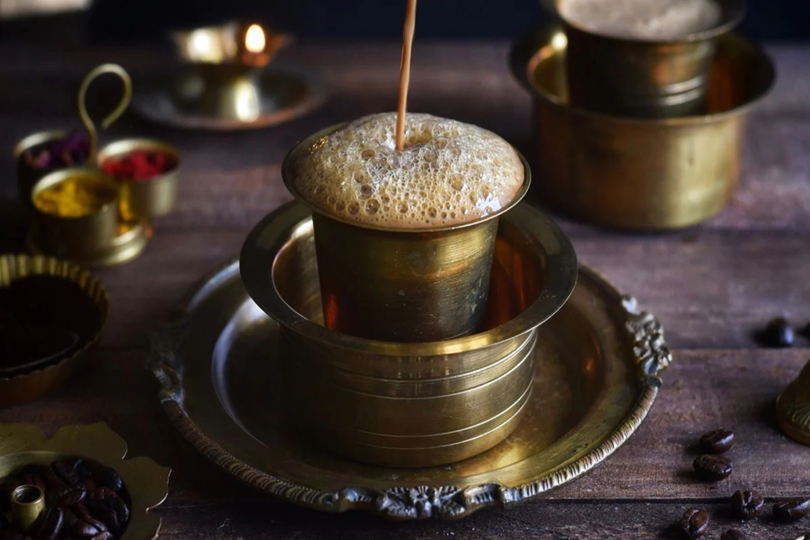
The serving vessel is as iconic as the brew itself: the Tumbler (a small metal cup) and the Dabara (a broad-based saucer). The act of pouring the hot coffee back and forth between the two vessels, known as ‘pulling’ or aattu in Tamil, is a crucial part of the filter coffee morning ritual:
- Cooling: It brings the scalding hot brew to a drinkable temperature.
- Mixing: It thoroughly blends the decoction, hot milk, and sugar.
- Frothing: It creates a signature layer of air foam (pāl āvi), which insulates the coffee and gives it a creamy texture.
This rhythmic, high-arc pouring, often executed with practiced precision and a satisfying swoosh, is the climax of the ritual, leading to the perfect degree—the ideal temperature and foam level for consumption. The act transforms a simple beverage into an event, a quiet celebration of the new day.
The Social Connector
While often a solo moment of contemplation, the filter coffee morning ritual is also profoundly communal. It is the mandatory offering to any guest, a symbol of welcome and hospitality. Sharing a cup is a way to bridge generations, with elders passing down the art of brewing and the stories associated with the local coffee estates.
- The Family Table: The routine of family members gathering for their morning coffee—before the chaos of school, work, and commutes begins—is a deeply cherished element of South Indian life.
- The Office Break: Even in professional settings, the kappi break remains a mandatory pause, a short period of respite and informal brainstorming among colleagues.
This shared experience confirms that the ritual fosters a deep sense of belonging, making the taste of South indian filter coffee synonymous with warmth, home, and heritage.
The Art of the Decoction: How to Make Filter Coffee
Mastering the decoction is the core of the filter coffee tradition in South India. The process is part science, part artistry, demanding patience and a dedicated set of tools. This detailed guide breaks down how to make filter coffee that rivals the best coffee houses.
Essential Equipment
Before you begin, you need the proper tools, which are simple, affordable, and reusable:
- The South Indian Coffee Filter (Brass or Stainless Steel): This is a two-chamber metal device.
- The Top Chamber (with holes): Holds the coffee powder and is where the hot water is poured.
- The Bottom Chamber: Collects the brewed liquid (the decoction).
- The Press/Tamper: A flat, perforated disc used to compress the coffee powder.
- The Coffee Blend: A fine-to-medium grind of dark-roasted Arabica or Robusta beans, usually blended with 15% to 30% chicory.
- Dabara and Tumbler: The traditional stainless steel vessels for mixing and serving.
Step-by-Step Guide: How to Make Filter Coffee
Follow these steps precisely to achieve the perfect, thick decoction:
Step 1: Preparing the Coffee Bed
- Measure: Scoop 2 to 3 rounded tablespoons of the coffee/chicory blend into the top chamber of the filter. The amount depends on the size of your filter and the desired strength.
- Tamp (Press): Place the perforated pressing disc gently over the coffee powder. Press down firmly and evenly. Do not press too hard, or the water will not pass through; press just enough to create an even, compact bed. This ensures even extraction.
- Place: Set the top chamber securely over the bottom chamber that will collect the decoction.
Step 2: The Pour and the Drip
- Boil Water: Boil fresh, filtered water. It should be just off the boil (around 90-95°C / 195-205°F).
- Pre-infusion (Optional but Recommended): Pour a tiny amount of hot water (just enough to wet the top layer) and let it bloom for 30 seconds. This releases gases and prepares the coffee for optimal extraction.
- The Main Pour: Pour the rest of the hot water slowly and steadily over the pressed coffee bed, filling the top chamber.
- Cover: Place the lid on the filter. This locks in the heat and aroma.
Step 3: The Slow Extraction
This is where the patience comes in. Do not disturb the filter.
- The liquid (the decoction) will begin to drip slowly into the bottom chamber.
- The first drips are the strongest, most flavorful essence. The process should take between 15 and 30 minutes. The darker the roast and the finer the grind, the longer the drip time.
- Note: You are aiming for a thick, almost syrupy decoction, not a thin, watery brew.
Step 4: The Final Mix and Froth
- Heat Milk: Separately, heat full-fat milk until it is steaming hot but not boiling.
- Combine: In the dabara, add 1 part decoction to 2 or 3 parts hot milk (adjust ratio to taste). Add sugar (usually a generous amount).
- The Pull: Pour the coffee mixture from a height between the tumbler and the dabara repeatedly. This aeration is key to the perfect foam and the final temperature.
- Serve: Serve immediately in the tumbler, garnished with the foamy head.
This entire process, from setting up the filter to the final pour, is the essence of how to make filter coffee—a focused, mindful task that yields a deep, satisfying flavor.
Why Filter Coffee is Still Popular: Enduring Relevance in a Modern World
In an age where global chains like Starbucks and Costa Coffee have permeated Indian markets, the fact that South indian filter coffee remains so dominant is a remarkable cultural and commercial phenomenon. The reasons why filter coffee is still popular are a compelling mix of cultural, economic, and sensory factors.
The Unwavering Flavor Profile
The number one reason for its sustained appeal is the taste. The unique blend of dark-roasted coffee and chicory creates a flavor profile that is distinctive and deeply comforting:
- Body and Thickness: Chicory provides a thicker body (degree) and a darker, less acidic flavor than pure coffee. This richness stands up perfectly to hot milk and sugar.
- Low Acidity: Darker roasts used in the blend naturally have less acid, which is easier on the stomach and provides a smooth taste profile.
- Nostalgia: For many, the taste of a perfectly brewed cup is linked to childhood memories of home, making it an emotionally resonant flavor that no amount of modern marketing can replace.
Affordability and Accessibility
For the vast majority of the population, South indian filter coffee is a cost-effective daily luxury. The materials and the process are incredibly accessible:
- Low Initial Cost: A metal filter is a one-time purchase that lasts for decades.
- Affordable Ingredients: High-quality beans are sourced locally, keeping costs low compared to imported, single-origin varietals.
- Street-Level Presence: From high-end restaurants to roadside kumbakonam coffee stalls, the availability of quality filter coffee ensures it remains the default morning drink.
This blend of quality and cost-effectiveness makes it the democratic beverage of choice.
The Rise of Mindful Consumption
In a fast-paced world, the deliberate slowness of the brewing process has ironically become a draw, not a deterrent. The filter coffee morning ritual is an exercise in mindfulness:
- Patience Rewarded: The 15-to-30-minute waiting period for the decoction drip forces a pause in the day. It’s a small act of waiting that emphasizes savoring the present.
- Personalization: Enthusiasts find deep satisfaction in fine-tuning the process—experimenting with grind size, tamping pressure, and chicory ratios. This personalized craftsmanship is a huge part of why filter coffee still popular.
The ritual provides a much-needed moment of quiet contemplation before diving into the digital world.
Sustainability and Health Benefits
The traditional method is inherently eco-friendly, appealing to modern concerns about sustainability:
- Zero Waste: The metal filter eliminates the need for disposable paper cups, plastic pods, or paper filters, making it a sustainable choice.
- Reusability: The entire apparatus is built to last for generations, reducing landfill waste.
From a health perspective, the robust flavor profile allows many to reduce their sugar intake over time, focusing on the dark, bold taste. The beans themselves—often a rich blend of Robusta and Arabica—are excellent sources of antioxidants. Furthermore, the slow-drip extraction is often viewed as a cleaner method, which is another subtle reason why filter coffee still popular among the health-conscious.
Mastering the Nuances: Bean, Blend, and Regional Variation
To truly appreciate the filter coffee tradition of South India, one must delve into the finer points of the coffee itself—the beans, the blend ratios, and the subtle variations found across different states.
The Bean Choice: Arabica vs. Robusta
South Indian coffee plantations primarily cultivate two types of beans, and a typical filter coffee blend utilizes both for their complementary characteristics:
| Bean Type | Characteristics | Role in Filter Coffee |
| Arabica | Aromatic, delicate, higher acidity, smoother flavor. | Contributes the sophisticated aroma and flavor complexity. |
| Robusta | Strong, bold, higher caffeine, earthy flavor, excellent body. | Provides the thick, robust body and the powerful caffeine kick essential for the morning ritual. |
A high-quality South indian filter coffee blend will often use a 70% Arabica to 30% Robusta ratio, dark roasted to achieve the signature depth of color and taste.
The Role of Chicory: From Necessity to Delicacy
The inclusion of chicory, while historically pragmatic, is now an intentional component of the traditional flavor profile.
- Flavor Contribution: Chicory root, when roasted and ground, possesses a slightly bitter, woody, and intensely caramelized flavor that complements the dark coffee beautifully.
- Consistency: It creates the characteristic thick viscosity known as dheku or degree (often colloquially referred to as ‘thick’).
- Standard Blends: Commercial coffee powders are commonly sold in ratios like 80% Coffee / 20% Chicory or 70% Coffee / 30% Chicory, allowing consumers to choose their preferred level of strength and thickness. The presence of chicory is a defining marker of the filter coffee tradition in South India.
Regional Variations and Serving Styles
While the basic preparation remains consistent, subtle differences in the filter coffee morning ritual exist across the South Indian states:
| Region | Key Characteristics | Local Name / Style |
| Tamil Nadu | Highly prioritized foam (pāl āvi); served with plenty of sugar; often uses a slightly higher chicory ratio for a dark, bold brew. | Kaapi, Madras Kaapi |
| Karnataka | Focus on the quality of the coffee bean (often pure Arabica from Chikmagalur/Coorg); slightly lighter roast; less emphasis on chicory in premium blends. | Mysore Filter Coffee, By Two Coffee |
| Andhra/Telangana | Often, a stronger, more concentrated decoction is preferred, reflecting a preference for high caffeine content. | Kaapi |
The Next Generation: A Timeless Legacy
The question of why filter coffee is still popular among the youth is perhaps the most interesting aspect of its story. Far from being relegated to history, it is experiencing a renaissance.
A Beacon of Authenticity
In a crowded market of ephemeral trends, South indian filter coffee stands out as a beacon of authenticity. Younger generations, seeking genuine, local experiences, are reconnecting with this tradition. Specialty coffee roasters in metropolitan cities are now focusing on single-estate Indian beans and teaching the traditional how to make filter coffee to new enthusiasts. The dabara and tumbler have become aesthetic, cultural symbols.
The Digital Kappi Break
Social media has played an unexpected role in preserving the tradition. Viral videos showcasing the high-arc pulling technique—a mesmerizing act of fluid mechanics and balance—have introduced the filter coffee morning ritual to a global audience. Bloggers and food influencers celebrate the ritual, reinforcing its cultural value and contributing to the question of why filter coffee still popular globally.
Bridging the Global and the Local
Modern establishments are not abandoning the brew; they are elevating it. Gourmet coffee shops are integrating traditional methods, offering specialized filter coffee blends alongside espressos and lattes. They are showcasing the excellence of Indian-grown beans, demonstrating that the local, historical brew is capable of competing on the global stage. This blend of tradition and modernity ensures that the filter coffee tradition in South India is not static, but a living, evolving practice.
South Indian Filter Coffee Endures
South indian filter coffee is much more than a drink; it is a beloved tradition that combines history, culture, and craftsmanship in every cup. Its legendary origins trace back to Baba Budan. The slow, careful brewing process uses a special metal filter, which captures the spirit and warmth of South India. Its unique flavor, enhanced by the careful preparation and optional chicory blend, continues to attract coffee lovers across generations.
Today, the filter coffee morning ritual remains popular not just for its taste but also for its cultural importance, comforting routine, inherent sustainability, and affordable excellence. It is a timeless symbol of hospitality and heritage, connecting people through a shared love for this heartfelt drink. The enduring strength of the filter coffee tradition in South India confirms that true quality and meaningful ritual will always outlast passing trends.
The answer to why filter coffee is still popular is simple: it offers the perfect balance—a powerful flavor, a moment of peace, and a link to a rich, shared past.
The story of South Indian filter coffee is a powerful testament to the fact that authenticity and tradition can not only survive but thrive in the face of rapid modernization and global homogenization. What began centuries ago as a whispered secret carried across continents by Baba Budan has blossomed into a magnificent, deeply cherished filter coffee tradition of South India, a heritage brew that anchors millions to their culture, their community, and the comforting predictability of a perfect morning.
This comprehensive journey into the history, method, and cultural relevance of the brew reveals that its enduring popularity is not a fluke, but a carefully earned status. The preparation itself—the methodical ritual of grinding the perfect blend, pressing the powder in the two-chambered filter, and the patient waits for the thick, dark decoction—is an act of mindful creation. The process encapsulates the very best of slow living, offering a sensory antidote to the digital rush that defines our world. To truly learn how to make filter coffee is to embrace patience, precision, and the rewarding knowledge that you are participating in a timeless art form.
The question of why filter coffee still popular finds its answer in a blend of economics, nostalgia, and an unparalleled taste experience. Economically, the accessibility and affordability of this locally grown, zero-waste beverage make it the democratic choice—a luxury available to all, from the bustling street vendor to the highest executive. Emotionally, the first sip connects generations. It is the taste of a grandmother’s kitchen, the aroma of a childhood home, and the mandatory offering of hospitality that instantly turns a stranger into a guest. This deep cultural resonance ensures that the filter coffee morning ritual is passed down, not as a duty, but as a cherished inheritance.
Beyond mere tradition, the sheer quality and robust flavor of South Indian filter coffee set it apart. The intentional use of the chicory-blended decoction provides a signature full-bodied thickness (the degree or dheku) and a low-acid, caramelized richness that stands up perfectly to hot milk and sugar. It is a bold, uncompromising flavor that coffee purists and casual drinkers alike adore. This unique, potent flavor profile is impossible to replicate with instant coffee or automated machines; it requires the human touch, the metal filter, and the dramatic flair of the aattu (the high-arc pour) to achieve its final, creamy perfection.
As we look toward the future, the filter coffee tradition South India is not fading; it is simply evolving. New generations of coffee enthusiasts are now rediscovering and actively celebrating the cultural value of the dabara and tumbler on a global scale. Modern, specialty roasters are highlighting the excellence of single-estate Indian Arabica and Robusta beans, ensuring that the legacy of Baba Budan receives the international acclaim it deserves. The tradition is proving its adaptability by finding its place in gourmet cafes alongside lattes, yet retaining its core identity. It serves as a reminder that the best things in life are often those that require a little more time, a little more effort, and a lot more heart.
The filter coffee morning ritual is therefore a quiet act of rebellion against the fast-forward nature of modern society. It forces us to pause, to savor, and to appreciate the small moment of warmth before the day’s chaos ensues. It is a continuous, comforting promise delivered every morning: a perfect cup, meticulously prepared, linking the past to the present. The enduring presence of this magnificent beverage confirms that when a ritual is infused with history, quality, and a profound sense of cultural belonging, it is truly timeless.
Now that you’ve journeyed through the rich history and meticulous process of how to make filter coffee, why not experience a perfectly brewed cup for yourself?
Skip the hassle of the decoction and join us in celebrating this magnificent tradition. Come savor the authentic, time-honored taste of South Indian filter coffee at our shop, Origins Coffee in Anna Nagar, Chennai.
We invite you to experience the ultimate filter coffee morning ritual, just as it should be.
Find us and explore our selection of premium beans at OriginsCoffee.